Thursday, 22 August 2013

LIFE, GLOBALISATION AND NETWORKING BLOG 2

http://toolkit.smallbiz.nsw.gov.au/media/useruploads/images/IM_Ch3_Pt2_The_Impact_of_Globalisation.jpg
 
 
With the progression of the power of globalisation, the world has become a map full of telecommunications and internet networks that embraces equality and diversity amongst people and the way they interact. Cultures have become transnational and the world has shrunk to where people, ideas and stories are just one click away . It enables those from the far end of the globe to narrate their own autobiography and "build on both Humanist and Posthuman concepts"(Mcneill, 2012, p. 103). Although the language barrier may affect communication and social interaction for individuals within some social networks. Experience Project is an example of this where communication and access to the network is English speaking control. It must be very frustrating for non-English speakers as this limits their access for narrating their life story, experiences and contributing to Experience Project. This in a way gives a bias sense to a certain  language within the networks context (Luyn, 2013) and empowers the domination of English speakers. This in comparison to a social network like Facebook where those non-English speakers have direct access as its software embraces you with open arms while it learns your story, background and then caters its network around you despite language or culture (Mcneill, 2012).
One of the real problems with Globalisation and the virtual networks like experience project is if the person participating in collaborating is real or an authentic user. One must always consider is his/hers narrative life story, experience real, can you trust this person. Or like James Frey apparent autobiography "A Million Little Pieces", that turned out to be an untrue experience that seemed like an act of deception to the readers (Luyn, 2013). Within cyberspace and a virtual network like Experience Project, its users authenticity of selves and autobiographies could only ever be known by those in control or by Facebook cause they know everything. Unlike a social network like Facebook, Experience Project does not insist of a entire autobiographical account of yourself or life before you can sign up or during your experience on the network. All it asks is for your gender and birthday which straight away provides a sense of authority for an individual. This site is about exercising power through interpersonal communication of knowledge and experiences between individuals (Allen, 2003), not a profit making, data mining initiative like Facebook (Mcneill, 2012).
 
References


Allen, J. (2003). Lost geographies of power.Malden, MA.: Blackwell.

 
Luyn, A. V. (2013). BA1002: Our Space: Networks, narratives and the making of place,   
                    Lecture 4 Networked narratives. Retrieved  from:
                   https: //learnjcu.jcu.edu.au/webapps/portal/frameset.jsp
 
Mcneill, L. (2012). There is no "I" in network: social networking sites and posthuman
                     auto/biography. Biography, 35(1), 101-118. Retrieved from:
                    learnjcu.jcu.edu.au/webapps/portal/frameset.jsp
 
Globalisation [Image]. Retrieved from:  


Week 3 Blog 1: Plant Swap


It is common knowledge that one should give a plant what it needs: water, sunlight etc. but it is not common knowledge that it also needs to be able to receive feedback from it's local environment via the resources it is given to maintain a good sense of Homeostasis, much like it needing to receive a map of it's environment.

Speaking of 'localized', Barnes (1997) talks about how cyberspace is not localized but exists in an 'inner map' we make for ourselves. This is quite different than what plants need but it reminds me of the artificial environments they are put under. Plants may seem to thrive on these artificial or domesticated circumstances but are actually put in a jeopardized position where they become dependent on humans. Our relationships between ourselves and the ecosystem including our plants could tell us of the cyber networks we use and how they may affect us. It could become quite easy for us to separate ourselves from real feedback from our local environment for artificial communities that may seem beneficial to us but which we are becoming all too dependent upon.

The more we separate from our local environment the more we have our personal power taken away from us, the same goes for plants. In her lecture Dr Theresa Petray (2013) speaks of how maps reflect their creators who tend to be the powerful. This is what happens with humans interactions with plants and plants too are shaped by the maps we give to them of their environment.

We often provide plants with a map of our social environment when we try to meet their needs. Soil that originates from this place and minerals that originate from another place. Plants are aware of more than what we give them credit for, they too are forming relationships to their environment. The plants often don't get a chance to adapt to a stable environment formed from natural causes.

For my network I chose to do a Yahoo Group called Plant Swap where people swap the seeds they've collected from the plants they've grown, this helps with biodiversity. I'm interested in how the people have come to see themselves in correspondence with the plants and if their views of themselves reflect the way they see their plants. If by meeting their own needs through networking they can meet the needs of the plants at the same time.

Plant Swap has an interesting power dynamic where people must post on the listserve and not to each other privately else they'll be banned. I thought this was a positive use of power getting everyone to participate in public, it feels safer knowing all that's going on in the group. If I'm in an online group that isn't local there is less I can be aware of what's going on so the more that is out in the public on the listserve and can be monitored the safer I'll feel.

Barnes, G. (1997). Passage of the Flaneur. Retrieved from: https://learnjcu.jcu.edu.au/webapps/portal/frameset.jsp
Petray, V. (2013). BA1002: Our Space: Networks, narratives and the making of place, Lecture 3.1 Maps: Seeing and shaping the world. Retrieved from: https://learnjcu.edu.au
  
Clematis & Lilies, Pat Gravel. Retrieved from: http://xa.yimg.com/kq/groups/139073/homepage/name/604303?type=sn


Monday, 19 August 2013

Week 3 Blog 1: Picture Perfect

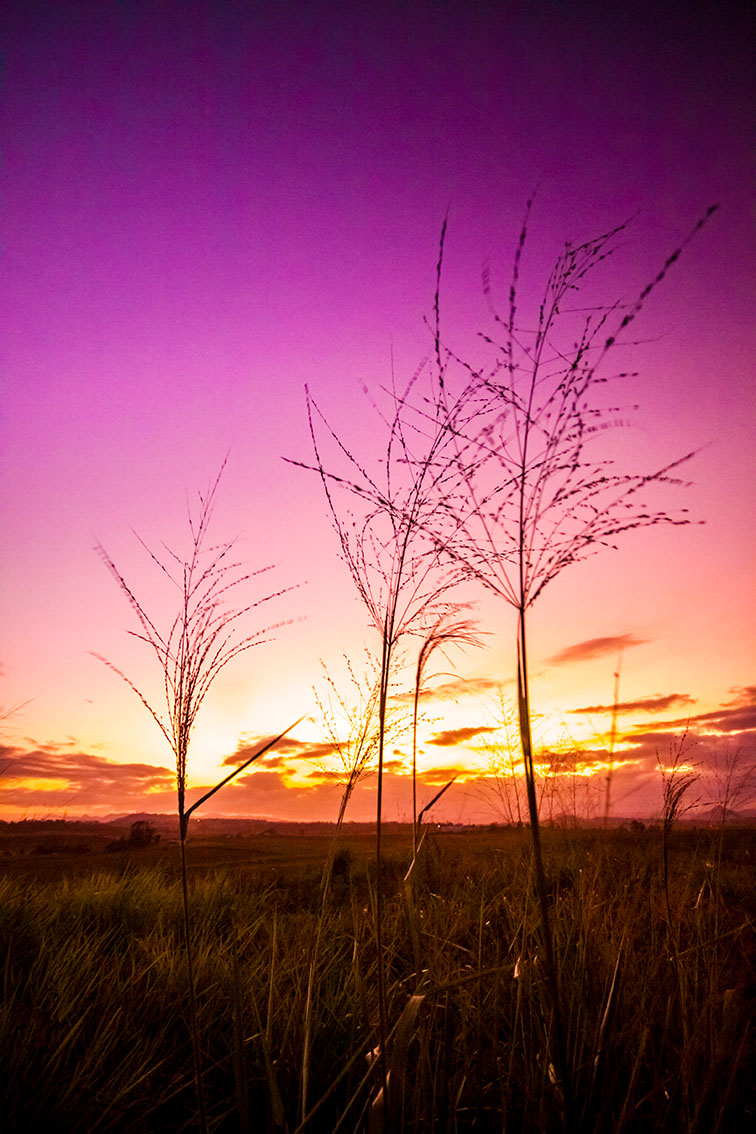
Grass Seeds at Sunset
In Dr, Theresa Petray's (2013) lecture, she stated how maps were "an illustration of society and shows us how society sees itself." Upon my search for a network last week, I decided I would join a network that for me, was more personal and creative than other networking sites. That is when my search came upon Deviant Art. This website is divided up into various categories and subcategories according to the different fields of artwork.

Referred to as a peer evaluation application, members can freely comment, critique and buy pieces of artwork submitted on the network. I chose this network because of its very user-friendliness, relaxed atmosphere and easy to navigation. I also found this network both interesting and inspiring as I enjoy looking at various artworks, designs and media. Having a deep love of photography, I was able to post up my photo collection under my real name for the world to see and criticize. I believe this way, if I ever chose to pursue career in photography, It would be a great way to advertise my pieces of work.

I believe by looking at the website's orientation, the presence of mapping is visible as the site shows how artists and viewers see themselves according to the different aspects of art found on the site much like the world maps discussed in Dr. Petrey's (2013) lecture.

In a way I believe there is similarity to Barnes (1997) ideas of the flaneur and those linked to Deviant Art. Barnes explains about how, to the flaneur "The arcades were a site of spectacles, majestic buildings, promenades and fashions that excited the insatiable appetite of the flaneur had for urban life in the capital cities." (Para 4) I also see various displays of photography on DeviantArt intoxicating to the various cyber-flaneurs just like the physical flaneurs in the arcades of Paris.

In conclusion, I found Deviant Art empowering as it is a great opportunity for me to connect to other users, chat socially with others with similar tastes and gain valuable, free advice to improve my skills and display my work to the virtual world.

References

Barnes, G. (1997). Passage of the flaneur.
Retreived from: https://learnjcu.jcu.edu.au/webapps/portal/frameset.jsp#global-nav-flyout

Petray, T. (2013,August). Lecture 3.1 Maps: seeing and shaping the world. [Video file]. Video posted on http://learnjcu.jcu.edu.au

Wikipedia. (2013) Deviant Art. Retrieved from:
http://en.wikipedia.org/wiki/DeviantArt

Image Credits

Schwenke,Karleigh (Artist).(2013).Grass Seeds at Sunset [Image] Queensland, Australia. Retrieved from http://karleigh93.deviantart.com/art/Grass-Flower-Sunset-390851340


Friday, 16 August 2013

Blog 1 - Twittering away

Twitter is an online social network that allows users to 'tweet', or broadcast messages to the world. It seems as though the purpose of Twitter is to gain followers in order to create your own personal virtual network in which you can broadcast your opinions to be seen by as many people as possible.

Dr Theresa Petray (2013) has stated in the lecture that maps are used as a way to illustrate the spatial distributions and implications of power. This is obvious in that those who have a larger network of followers, such as famous actors and musicians hold the majority of power within the site, they are undoubtedly more influential that someone like myself who has only two followers so far. Twitter relies on the celebrities as a way to draw people into the site. According to Barnes (1997) "The user is thereby ensnared within the virtual space merely by the force of their desire for spectacle". The lure of celebrity gossip has been used to sell merchandise for years and is now being used in these websites like Twitter, with thousands of celebrity accounts promoting events.

The site is well set out so that a single message can be broadcasted to hundreds of people at one time within a matter of minutes, if this was to be undertaken in real world time it would take a lot longer. The site allows the users to feel as though they have unlimited potential in following the lives of others. Barnes (1997) explains that "Although the cyber-Flaneur is physically immobile, their gaze is 'mobilized' by an illusion of spatial and temporal mobility -  a perception of virtual locomotion in time with an alternative geography". The movement around the site is fluid with a menu being made available to quickly change from each account to another which allows the user to follow the tweets of a friend living down the road to a celebrity living across the world.

References
Barnes, G. (1997). Passage of the Flaneur. Retrieved from: https://learnjcu.jcu.edu.au/webapps/portal/frameset.jsp

Petray, V. (2013). BA1002: Our Space: Networks, narratives and the making of place, Lecture 3.1 Maps: Seeing and shaping the world. Retrieved from: https://learnjcu.edu.au

Image references
 Twitter network. Retrieved from: http://www.toprankblog.com/2009/02/12-twitter-stream-aggregators/

Is freedom to roam empowering or disempowering? I think both

I have joined Weight Watchers (WW) ETools; a virtual network that allows you to follow the WW plan and track and plan your food, exercise, and healthy habits. There is a community component of the site where you make a profile and can comment on recipes, community blogs, and join groups.

I created a profile and chose to keep my own identity. When I was deciding I had a look around the site, the people seemed genuine and the ground rules fit with my values.


Dr Theresa Petray (2013) stressed in the lecture, when talking about the New Scientist article about digital maps, that "for centuries the center of the world was the hub of civilization and now it's you". I feel the WW home page gives you this feels, that you are the center of their huge network, however as seen in the screen shot of the page (left) you are directed to certain areas each day you log on.

The online network allowed me more freedom that when I attended physical WW meetings. At meetings other members who were older and had more weight to loose dominated and I did not feel I could contribute. The privacy of my own computer meant that I was free to browse all of the content without these worries and found that community bloggers to be a similar age. 


To finish, I feel that the virtual network empowered me by allowing me to feel that U have the same right to access the information to lose 5kg as someone with 75kg to lose. I am still only a flaneur in the online community; I have not yet contributed anything to the space only looked around. I agree with Barnes(1997) that I have been "left to flounder through the [site]...without a proper sequential orientation" (para 4). There is some direction given on the home page however, when you follow the links the other elements are free roam. Without a sequential orientation after I have explored the site and browsed the blogs and articles that interest me I did not feel that I have achieved much which is disempowering. 


References
Barnes, G. (1997). Passage of the Flâneur. Retreived from http://www.raynbird.com/essays/Passage_Flaneur.html
Petray, T. (2013). BA1002: Our Space: Networks, narratives and the making of place, Lecture 3: Map: Seeing and representing the world.  [PowerPoint slides]. Retrieved from http://learnjcu.edu.au

Thursday, 15 August 2013

"Yarning Around" in the Virtual World


 Yarn, glorious yarn!

I have been a member of Yarn Corner for approximately two years. I joined this community under my real name as I have a love of crafts and Yarn Bombing. The group has gone from 3 members to over 500 in less than 3 years; we yarn bomb in public places, sometimes for advertising, but mostly for the love of the public.

The group is run by 4 administrators who run a very open environment. They share their knitting and crochet knowledge with everyone to make a stronger group. The power is not always recessive and can be open. (Petray, 2013)

 The group is very easy to navigate around, with all documents, files, pictures and information in the one place. There is an open members list, which anyone can view and edit. When one enters the realm of cyberspace, it is without the body and therefore out of the grasp of the rules of physicality. (Barnes, 1997) The administrators have made it very easy for us to have free movement within the space.

There is a lot of freedom when traveling about this virtual space. It can be likened to the Flaneur, someone who is adrift in the city, a detached observer strolling through the streets at a leisurely pace. (Prouty, 2009) 

Being a member of yarn corner is a very empowering experience for me in virtual space as it gives me access to the following:
  • Those with similar interests
  • Endless yarn shops online and their links
  • Patterns, patterns and more patterns
  • A really fun place to chat with others
Yarn Corner is a great place to go and an even more fantastic group to be part of. I have also recently joined the JCU yarn group, Chicks with Sticks.

Bibliography

Barnes, G. (1997). Passage of the Cyber - Flaneur. Retrieved from Raynbird: http://www.raynbird.com/essays/Passage_Flaneur.html
Petray, D. T. (2013, August 12). Big Brother and Self-Sureveillance. Townsville, Queensland, Australia: James Cook University.
Prouty, R. (2009, October 28). A Turtle on a Leash. Retrieved from One-Way Street: http://onewaystreet.typepad.com/one_way_street/2009/10/a-turtle-on-a-leash.html